Commercial Water Treatment for Breweries & Beverage Producers: Consistency Across Batches

For breweries and beverage producers, water is more than an ingredient. It is part of the production process, the final product, and the customer experience. Whether a business produces beer, coffee, tea, kombucha, flavored beverages, syrups, or other bottled and tap-based products, process water can influence taste, equipment performance, product consistency, and day-to-day operations.
That does not mean every beverage producer needs the same water treatment system. The right solution depends on the source water, production goals, equipment used, and the level of control needed across batches. In many commercial settings, filtration, softening, reverse osmosis, or a combination of treatment methods can help producers better manage water quality before it enters the production process.
For breweries and beverage producers that rely on consistency, understanding water treatment is an important step in building a more reliable operation.
Why Water Quality Matters in Beverage Production
Water quality can vary by location, building, plumbing system, municipal supply, or private well source. Even when water is considered safe for use, it may still contain minerals, sediment, chlorine, hardness, or other characteristics that affect its performance in a production environment.
In beverage production, these factors can be important because water often constitutes a significant portion of the final product. It can influence flavor perception, mouthfeel, aroma, clarity, extraction, carbonation behavior, and ingredient performance. For breweries, water chemistry can also influence how recipes are developed and replicated.
Commercial producers often pay close attention to ingredients, equipment, recipes, timing, and sanitation. Water deserves the same level of consideration because it touches many parts of the process.
For a closer look at how water can affect flavor, Aqua Solutions explains more in its guide on how water quality impacts taste.
Consistency Starts With Process Water
Process water is water used, directly or indirectly, in production. Depending on the facility, this may include water used for brewing, blending, extraction, dilution, rinsing, steaming, cleaning, or feeding specific equipment.
When process water changes, the production process can become harder to control. A recipe that performed well one week may behave differently the next if the water supply changes in hardness, mineral content, chlorine level, or sediment load. Even small differences can pose challenges for a producer trying to maintain a consistent product.
For breweries, beverage makers, coffee roasters with café operations, food manufacturers, and other commercial producers, water treatment can help create a more stable starting point. The goal is not to make unrealistic promises about taste or production results. The goal is to reduce variables where possible so the business can work with more predictable water.
Common Water Quality Concerns for Breweries and Beverage Producers
Every facility is different, but several water quality issues are common in commercial beverage production.
Hard water is one of the most frequent concerns. Water hardness is caused by a concentration of minerals such as calcium and magnesium in the water. In some settings, these minerals may contribute to scale buildup inside equipment, piping, heaters, valves, spray nozzles, and other components. Scale can affect efficiency, increase maintenance needs, and interfere with equipment performance over time.
Sediment can also create problems. Particles in the water supply may affect filters, valves, fixtures, and production equipment. In some cases, sediment can contribute to cloudy water or create additional strain on downstream systems.
Chlorine and chloramines are also important to evaluate. Municipal water suppliers often use disinfectants to maintain water safety. While that is important for public water systems, chlorine taste or odor can be noticeable in certain beverages. Producers may choose filtration to help reduce these characteristics before water enters the production process.
Mineral content can also affect recipe development. Some producers want to preserve certain minerals, while others want to reduce their levels and rebuild the water profile to meet the product's needs. This is one reason there is no single water treatment approach that fits every brewery or beverage facility.
Filtration for Better Water Control
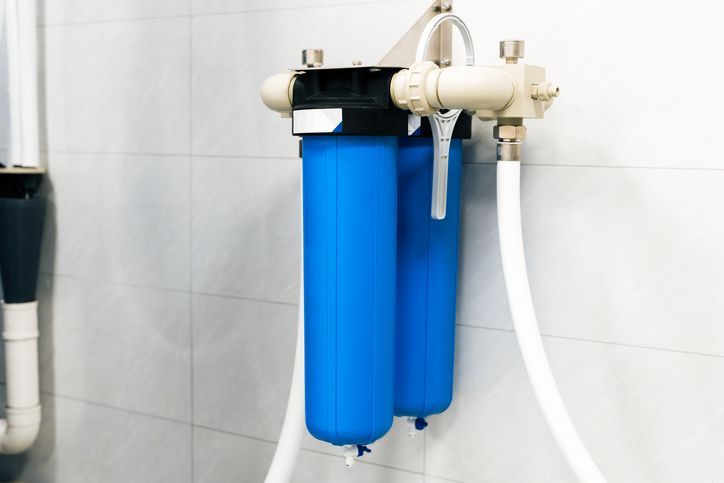
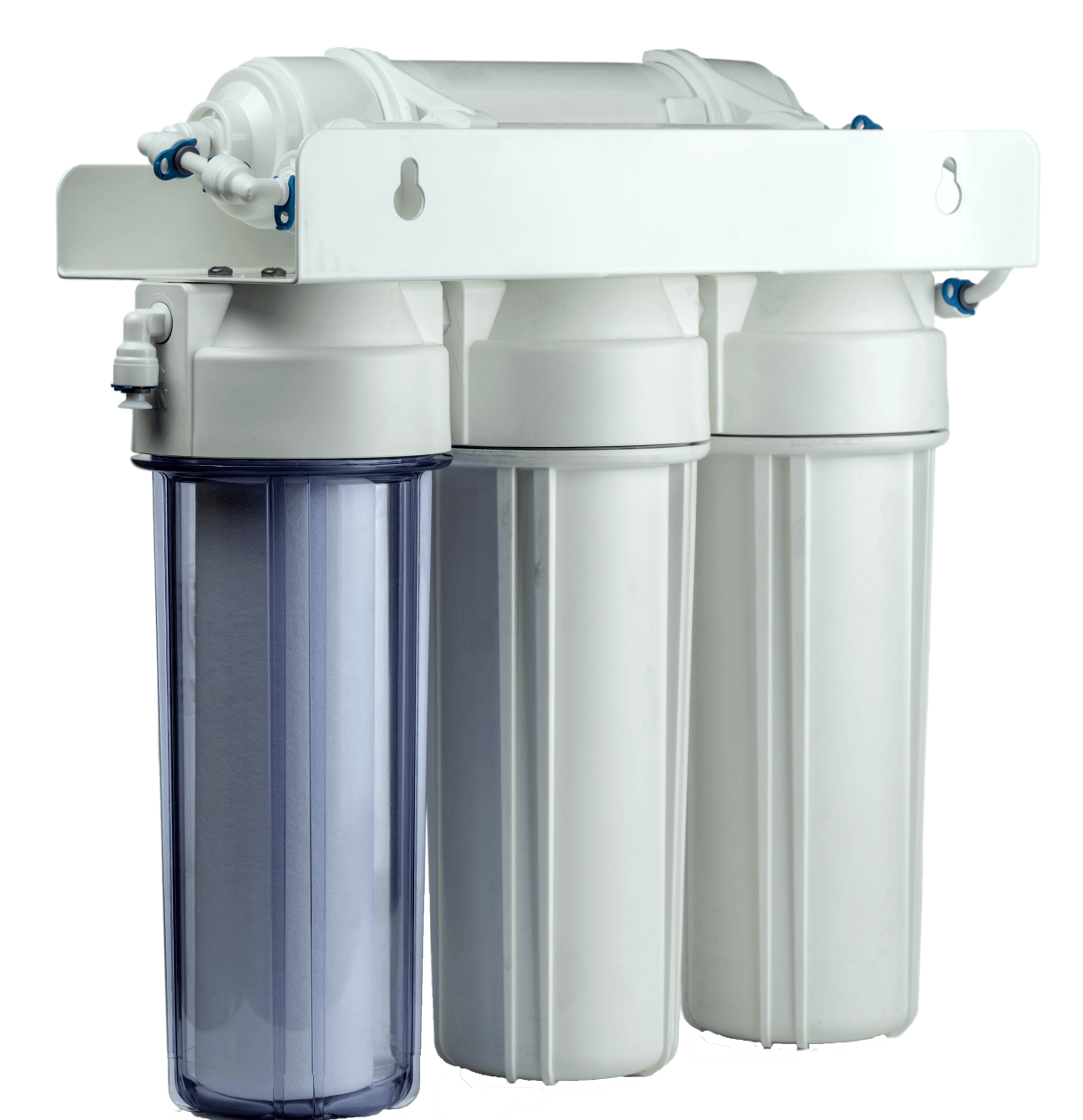
Commercial filtration systems are often used to reduce sediment, chlorine taste and odor, or other unwanted characteristics before water reaches production equipment. The type of filtration depends on the water quality issue and the production goal.
For example, a facility may use sediment filtration to help protect equipment and reduce particulate matter. Carbon filtration may be used to reduce chlorine taste and odor. Other filtration methods may be selected based on what is present in the water and how it is used.
Filtration can be especially helpful when the main goal is to improve the consistency of incoming water without removing as many dissolved minerals as reverse osmosis would. This may be appropriate for certain beverage producers that want to address taste, odor, or sediment concerns while maintaining some of the water's natural mineral profile.
A commercial water treatment provider can help determine whether filtration alone is appropriate or whether the business would benefit from a more complete treatment approach.
Water Softening for Hardness and Scale Concerns
Water softening is commonly used when hardness is a concern. In commercial settings, softening may help reduce scale buildup in equipment and plumbing systems. For beverage producers, this can be important because scale can create maintenance issues and may affect equipment that relies on heating, spraying, or consistent water flow.
A softener may be used before certain equipment to help protect it from hardness-related buildup. However, softened water is not always the right choice for every production use. In some beverage applications, producers may need to carefully consider how softened water fits into the recipe or process.
That is why water softening should be viewed as one possible tool, not a universal solution. The system should be designed around the facility's water test results, equipment requirements, and production needs.
Reverse Osmosis for Greater Control
Reverse osmosis, often called RO, is another option for breweries and beverage producers seeking greater control over their water. RO systems are designed to reduce many dissolved solids and other substances from water, creating a more controlled base.
For some producers, RO water provides a blanker starting point that can be adjusted to meet the needs of a recipe or product line, which may be useful when the incoming water has high mineral content, inconsistent characteristics, or unwanted taste that is difficult to manage with basic filtration alone.
RO may be a good fit for certain beverage operations, but it is not always necessary for every facility. Some businesses may need only sediment filtration, carbon filtration, softening, or a targeted system designed to address a specific issue. Others may benefit from RO as part of a broader treatment strategy.
For businesses comparing available options, Aqua Solutions provides a helpful overview of reverse osmosis vs. other filtration methods.
Matching the System to the Production Goal
The best commercial water treatment system starts with the goal. A brewery or beverage producer may be trying to improve flavor consistency, reduce scale, protect equipment, address sediment, reduce chlorine taste, create a more controlled water profile, or support production growth.
Each goal may point to a different solution. For example, a producer concerned about chlorine taste may need carbon filtration. A facility struggling with scale may need softening. A business that wants a more controlled water base may consider reverse osmosis. A larger operation may need a multi-stage system that addresses several concerns at once, which is why proper assessment matters.
A water treatment system should be based on water testing, production needs, flow rate, equipment demands, space, maintenance requirements, and business goals. Installing a system without understanding the water can lead to under-treatment, over-treatment, or equipment that does not match the operation.
Why Consistency Matters Across Batches
For beverage producers, consistency is closely tied to trust. Customers expect the product they enjoyed last time to taste familiar the next time they buy it. Retail partners, taproom customers, wholesale accounts, and distributors all rely on dependable production.
While water treatment cannot control every variable, it can help reduce one important source of variation. When incoming water is more stable, production teams can better focus on recipe execution, ingredient quality, timing, cleaning procedures, and other process controls.
Consistency is also important as a business grows. A small producer may be able to make manual adjustments from batch to batch, but larger production volumes often require more repeatable systems. Commercial water treatment can support that growth by helping create a more reliable foundation for production water.
Equipment Protection and Operational Efficiency
Water treatment is not only about the final product. It can also support the equipment behind the process.
Hardness, sediment, and mineral buildup can affect boilers, water heaters, steam equipment, pumps, valves, nozzles, filtration units, and other commercial systems. Over time, untreated water issues may lead to increased maintenance needs, reduced efficiency, clogged components, or inconsistent performance.
By addressing water quality before it reaches sensitive equipment, beverage producers may reduce avoidable strain on their systems. The specific benefits depend on the water conditions, the equipment, and the treatment method used. Still, equipment protection is often a key reason commercial facilities evaluate water treatment in the first place.
Planning for Maintenance
Any commercial water treatment system needs ongoing maintenance. Filters need to be replaced; softeners need salt and service; RO membranes need monitoring; and system performance should be checked over time. Maintenance planning is especially important for producers because water treatment is connected to daily operations.
A system that is not maintained properly may stop performing as expected. That can create production issues, affect water quality, or place stress on equipment. When choosing a treatment system, businesses should also understand the maintenance schedule, service requirements, and signs that the system may need attention.
A good water treatment plan should account for both installation and long-term care.
Commercial Water Treatment Should Be Built Around the Facility
Breweries and beverage producers often have different needs from those of offices, restaurants, or other general commercial buildings. Production schedules, batch sizes, water usage, equipment types, sanitation practices, and product standards all affect how a system should be designed.
A small brewery may need a different solution from a larger beverage bottling operation. A café producing coffee-based drinks may have different priorities than a kombucha producer or a facility blending flavored beverages. Even two businesses in the same industry may need different systems if their source water or production goals are different.
That is why the conversation should begin with questions such as:
- What is the water being used for?
- What water quality issues are present?
- How much water does the facility use?
- What equipment needs protection?
- What level of consistency is required?
- Is the goal filtration, softening, RO, or a combination?
- What maintenance schedule can the business support?
The answers help guide a system that fits the real operation rather than applying a one-size-fits-all solution.
Building a More Reliable Water Foundation
For breweries and beverage producers, water treatment is one part of a larger quality and production strategy. It supports consistency by helping control the water used throughout the process. It may also help address equipment concerns, taste issues, hardness, sediment, or the need for a more controlled water profile.
The right system depends on the facility and its goals. Filtration may be enough for some businesses. Others may need softening or reverse osmosis. Many commercial operations benefit from a customized approach that integrates multiple treatment methods.
Aqua Solutions works with businesses to evaluate water quality and identify commercial water treatment options that fit their needs. For breweries and beverage producers, that means building a practical water treatment strategy around consistency, process control, and long-term operation. Contact us today to get started.

Author:
Gary Monks
Gary Monks has led Aqua Solutions since 1997, earning recognition as a water treatment expert with 25 years of experience. Renowned in Butler, he has won the Best Water Treatment award for three years and actively supports the community, including local sports and radio engagements.